Few comic book characters ignite fan debate quite like Galactus, the Devourer of Worlds. With the first trailer for The Fantastic Four: First Steps dropping, the long-simmering Fan Discussions and Theories on Galactus's True Size have erupted anew. From comic panels to the silver screen, Galactus’s scale has always been a cosmic enigma, a fascinating paradox that challenges our understanding of power, perception, and narrative.
Forget the simplistic notion of a character with one fixed height. Galactus is a being of such immense power and cosmic significance that his very physical manifestation bends to his will, the needs of the narrative, and even the perception of those beholding him. This isn't a mere inconsistency; it's a fundamental aspect of his identity, and the MCU's approach promises to delve into this complexity with unprecedented depth.
At a Glance: The Galactus Size Debate in a Nutshell
- Comic Origin: Galactus first appeared smaller than a skyscraper but possessed the ability to alter his size and appearance at will.
- MCU Trailer Reveal: The Fantastic Four: First Steps trailer shows Galactus's size fluctuating dramatically—from a shadow covering Manhattan to being only slightly taller than the Statue of Liberty.
- Not a Mistake: This size variability is faithful to his comic book portrayal, where he shrinks for interaction and grows for consumption.
- Why the Change? The MCU's decision for a more "manageable" scale is rooted in adapting comics for cinema, fostering emotional connection, exploring deeper themes, and practical VFX considerations.
- Thematic Depth: A variable Galactus allows for more nuanced character development, focusing on strategy and motivation rather than just raw, unmoving power.
- Fan Theories: Debates center on whether his size correlates to power, intent, or the observer's mind, all valid given his comic history.
Beyond the Cosmic Cloud: A History of Galactus’s Shifting Scale
For decades, Galactus has been one of Marvel's most imposing figures, not just for his planet-eating appetite, but for his sheer, incomprehensible scale. Yet, even in the comics, the idea of his "true size" has always been fluid, a concept far grander than a simple measurement.
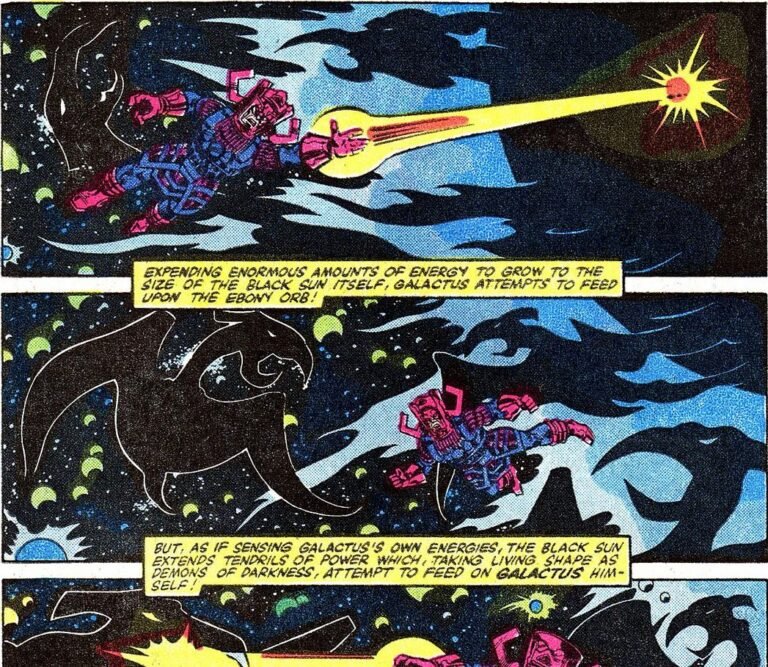
When Galactus first debuted in Fantastic Four #48 back in 1968, he wasn't immediately presented as a being whose head touched the highest stars. Indeed, his initial appearance saw him depicted as being smaller than a skyscraper when interacting with the Fantastic Four. This wasn't a limitation of the artwork; it was an early indication of his extraordinary abilities. Galactus, the last survivor of a prior universe, is not bound by conventional physics or fixed forms. He has always possessed the power to change his size and even his appearance at will, a cosmic shapeshifter capable of becoming smaller to engage with planetary inhabitants or expanding to colossal, planet-consuming proportions.
This inherent variability is crucial to understanding him. He might loom over a planet as a colossal, awe-inspiring entity, but then shrink to a more human-like scale when confronting an individual hero or a group like the Fantastic Four. This ability serves a dual purpose: it allows for direct, dramatic interaction, and it underscores his alien nature – a being who transcends our conventional understanding of physical form.
Early adaptations, however, often struggled with this nuance. The 2007 Fantastic Four: Rise of the Silver Surfer famously (or infamously, depending on who you ask) rendered Galactus as a cosmic cloud, an unthinking, unfeeling force of nature. While visually immense, this depiction stripped away his iconic anthropomorphic form, his voice, and the very complex characterization that makes him so compelling in the comics. It represented a cinematic attempt to convey scale, but at the cost of character and the very distinct personality that defines the Devourer. This decision, driven by the challenge of portraying a genuinely planet-sized, purple-helmeted entity on screen without it appearing absurd, ultimately left many fans yearning for a more faithful representation.
The MCU's Galactus: A Study in Cinematic Adaptation
Fast forward to the highly anticipated The Fantastic Four: First Steps trailer, and we see a Galactus unlike any live-action version before. Voiced by the superb Ralph Ineson, this iteration finally brings the anthropomorphic, helmeted Devourer to the big screen, a faithful callback to his comic book roots. But what truly set the internet abuzz was his size.
First Steps into the MCU: A Glimpse of the Devourer
In the trailer, we witness Galactus in various states of being, and his size, true to his comic legacy, is anything but static. One shot reveals the immense shadow of his helmeted head cast over New York City, stretching across Manhattan. This visual implies a truly gargantuan entity, perhaps miles tall, dwarfing skyscrapers and conveying an existential threat. It's a breathtaking image that immediately establishes his monumental presence.
The Fluctuating Giant: A Comic-Accurate Paradox
Yet, in another scene, Galactus appears significantly smaller, still enormous, but perhaps only hundreds of feet tall—noticeably just a bit taller than the Statue of Liberty. This apparent discrepancy sparked immediate discussions: Was this a mistake? An inconsistency? For those unfamiliar with Galactus’s comic book history, it might seem like a continuity error, a misstep in visual effects.
However, the truth is far more exciting for comic purists and narrative enthusiasts alike: this fluctuating size is not an error; it is explicitly comic-accurate. As established in his earliest appearances, Galactus changes his physical dimensions as he sees fit. He can expand to consume entire worlds, becoming a force of nature so vast that he can only be perceived in fragments, or he can shrink to engage in a more direct, character-level confrontation. His appearance can even be influenced by the perception of those observing him, a subtle nod to his cosmic, almost ethereal nature. The MCU is not just replicating his look; it's embracing the core aspects of his mysterious power. To grasp the full implications of this, it's essential to consider Understanding Galactuss true scale as a fluid concept rather than a fixed measurement.
Unpacking the "Why": Strategic Choices Behind Galactus's MCU Scale
The decision to portray Galactus with this inherent size variability in the MCU is not arbitrary. It’s a deliberate, multi-faceted strategic choice, reflecting a deep understanding of cinematic storytelling and the complexities of adapting a character of such immense power and scope. These reasons go beyond mere visual effects; they delve into narrative integrity, character development, and audience engagement.
Adapting for the Big Screen: Filtering the Multiverse
Translating comic books to the cinematic universe is a delicate art. It requires not just replication but adaptation. A direct, one-to-one transfer of every comic panel often leads to a convoluted or unwieldy narrative. The MCU’s approach involves filtering information, streamlining story arcs, and adjusting certain elements to fit a cohesive, compelling big-screen experience. For Galactus, this means taking his established comic abilities—including size-shifting—and leveraging them to serve the film’s narrative in the most effective way possible. It’s about making the fantastical believable and relatable within the established rules of the MCU.
The Scale Challenge: Visualizing the Incomprehensible
Imagine trying to effectively portray a truly planet-sized Galactus in a live-action film. How do you show characters interacting with him? How do you convey motion, emotion, or even threat when the antagonist is an unmoving, distant titan? The sheer scale quickly becomes an insurmountable challenge, risking a loss of human element and emotional connection. The audience needs to see and feel the impact of Galactus, not just conceptualize it. A variable size allows for both the terrifying cosmic grandeur of his planet-eating nature and the intense, personal drama of a confrontation with Earth’s heroes.
Fostering Emotional Connection: The Face of the Devourer
One of the greatest strengths of the MCU has been its ability to make even cosmic-level threats emotionally resonant. Thanos, for example, was a compelling villain because his motivations and internal conflicts were explored. A Galactus who can appear in a more "human" anthropomorphic form, even if still gargantuan, opens the door for similar nuanced character development. We can see his expressions, understand his imposing but perhaps weary demeanor, and potentially even explore his motivations, conflicts, or moments of regret. A Galactus who can shrink to engage with characters allows for dialogue, strategy, and a more direct exploration of his complex existence, making him more than just a force of nature; he becomes a character with depth.
Thematic Resonance: Power, Consumption, and Responsibility
Galactus's story is inherently thematic. He embodies overwhelming power, the endless cycle of consumption, and the desperate struggle for survival. By presenting him in a variable scale, the MCU can explore these themes more intimately. A smaller, interacting Galactus can symbolize the complexities of power dynamic between individuals and cosmic forces, raising questions about responsibility, the ethics of consumption (even cosmic consumption), and the struggle against an inevitable fate. This approach allows the narrative to reflect on human struggles related to resource consumption and environmental challenges, albeit on a galactic scale, making the cosmic threat feel more poignant and relevant.
Cinematic Style & Practicality: Dynamic Action and VFX Efficiency
From a purely cinematic perspective, a variable-sized Galactus is a strategic win. It allows for direct interactions, dynamic action sequences, and engaging confrontations that emphasize intelligence and strategy rather than just brute, unmoving force. Envisioning a fight sequence between the Fantastic Four and a truly planet-sized entity is virtually impossible to make compelling. However, a giant, but not unfathomably giant, Galactus who can engage in physical or even verbal sparring provides fertile ground for dramatic tension and visually stunning effects. It's also significantly more practical for visual effects artists, allowing them to create detailed, believable interactions without having to constantly render a being of truly astronomical proportions that would dwarf every other element on screen.
Fitting the MCU Tapestry: Consistency with Cosmic Precedent
The MCU has established a precedent for its cosmic characters. Thanos, while powerful, was ultimately an individual, interacting with heroes on a personal level. The Celestials, while immense, were shown mostly in flashback or as ancient, dormant entities. A Galactus who can shrink to interact aligns perfectly with this established trend, allowing him to be a formidable, distinct villain within the existing framework. It reinforces the MCU's shift toward character-centric narratives and emotional depth, even for its most powerful cosmic beings. He's designed to be a practical antagonist, capable of retaining his iconic appearance and menace without becoming an unmoving, abstract force of nature that the heroes cannot genuinely confront.
Fan Discussions & Theories: Decoding the Cosmic Conqueror's Form
The reveal of Galactus's variable size in the Fantastic Four trailer has predictably ignited a fervent wave of Fan Discussions and Theories on Galactus's True Size. This isn't just about nitpicking; it's about fans engaging with the lore, trying to make sense of a character who defies conventional logic, and debating the implications for the future of the MCU.
The "One True Size" Myth: A Flawed Premise
Perhaps the most common initial reaction is the desire to pin down Galactus to a single, definitive "true size." However, as comic readers know and the MCU is now confirming, this premise is flawed. Galactus doesn't have one true, fixed size in the way a human or a building does. He is a cosmic entity whose existence transcends such mundane measurements. Theories that try to establish a singular, consistent height often miss the fundamental, shape-shifting nature of his being. The discussions surrounding this often reveal a disconnect between expectations for a grounded reality and the inherently fantastical nature of a cosmic devourer.
Perception vs. Reality: The Eye of the Beholder
One prevalent theory, deeply rooted in comic lore, is that Galactus's physical appearance, including his size and even his color scheme, is often dictated by the perception of the sentient being observing him. He might appear differently to a human, a Skrull, or a Kree. This isn't just a quirky detail; it highlights his immense power and alienness. His form is not absolute; it is a manifestation that adapts to be comprehensible, or perhaps most terrifying, to the observer. This leads to fascinating discussions: Are we seeing his 'true' form when he's Manhattan-sized, or when he's 'just' taller than the Statue of Liberty? The answer, according to this theory, is that both are "true" within their respective contexts of observation.
The "Interacting Form" Theory: Strategic Shrinking
Many fans have coalesced around the "Interacting Form" theory, which posits that Galactus intentionally shrinks himself to a more manageable (though still colossal) size when he needs to communicate, strategize, or engage in direct combat. When he's about to consume a planet, he grows to truly planetary scale, becoming the all-encompassing force of nature he is. But when facing a defiant hero or delivering a cosmic ultimatum, a more contained (but still overwhelming) form allows for character beats and direct confrontation. This theory makes perfect narrative sense, explaining how the Fantastic Four could ever hope to stand before him without being immediately vaporized by his sheer scale alone.
The "Energy Consumption" Theory: Size as a Power Bar
Another intriguing theory suggests that Galactus's current size might be directly tied to his energy levels or how recently he has fed. A fully sated Galactus, brimming with cosmic energy, might be capable of manifesting at his most immense, planet-dwarfing scale. Conversely, a hungry or weakened Galactus might manifest in a smaller, more conserved form. This adds a dynamic layer to his threat level, allowing for varying levels of power and urgency in different storylines. It could also provide a cinematic justification for why he might appear smaller during initial encounters, only to grow to truly terrifying proportions as he prepares for his ultimate goal.
The "Cinematic License" Debate: How Much Deviation is Acceptable?
Inevitably, discussions also touch upon the broader topic of "cinematic license." While the MCU's variable Galactus is comic-accurate, any deviation from a fan's personal ideal or a specific iconic panel often sparks debate. Some argue that a cosmic entity must always be incomprehensibly large to maintain its threat level, while others appreciate the narrative and practical benefits of a more adaptable scale. This debate highlights the ongoing tension between strict adherence to source material and the necessity of adapting stories for a new medium and audience. The key, as the MCU demonstrates, is to understand the spirit of the character, even if the exact presentation shifts.
Ralph Ineson's Impact: Giving Voice to the Void
The casting of Ralph Ineson and the commitment to an anthropomorphic Galactus are central to these discussions. Fans now have a physical presence and a distinct voice to latch onto, immediately elevating the character beyond the formless cloud of previous adaptations. Ineson's deep, resonant voice alone adds layers of authority, menace, and perhaps even ancient weariness to the Devourer, making his smaller, interacting form infinitely more impactful than a silent, distant presence. This allows for a deeper exploration of his personality, motivations, and internal struggles, transforming him from a simple force of nature into a complex, tragic figure.
Addressing Common Misconceptions About Galactus's Size
The fervent discussions around Galactus's MCU debut also bring to light several common misconceptions. Clearing these up is crucial for a richer appreciation of the character and the filmmakers' choices.
Misconception 1: The Trailer is Inconsistent
Correction: Far from being an inconsistency, Galactus's fluctuating size in the Fantastic Four: First Steps trailer is a deliberate, comic-accurate portrayal of his powers. In the comics, he frequently adjusts his physical dimensions to suit his needs, whether interacting with smaller beings or consuming entire worlds. This adaptability is a core part of his identity, showcasing his cosmic power rather than a continuity error. The filmmakers are not just showing one version of his size; they're illustrating his ability to change it.
Misconception 2: Smaller Galactus = Less Threatening
Correction: A Galactus who can appear "smaller" (yet still hundreds of feet tall) doesn't diminish his threat; it reframes it. Instead of an abstract, unmoving force that simply is, a more interactable Galactus becomes a strategic and emotional threat. His intelligence, ancient wisdom, and vast cosmic power become more immediate and terrifying when he can speak, make eye contact, and engage directly. The threat shifts from passive destruction to active, intelligent predation, making him a more personal and formidable antagonist for the heroes. It emphasizes his role as a character rather than just a natural disaster.
Misconception 3: He's Always Planet-Sized
Correction: While Galactus's ultimate function is to consume planets, he is not perpetually planet-sized. He only assumes that gargantuan scale when actively engaged in the process of consuming a world. For the vast majority of his comic appearances, when he's interacting with heralds, confronting heroes, or simply traveling, he is depicted at a size that, while still immense by human standards, allows for visual storytelling and character interaction. The idea of him always being planet-sized is a misconception born from focusing solely on his function rather than his full range of abilities and manifestations.
Beyond the Visuals: The Implications of Scale on Narrative
The MCU's choice to embrace Galactus's variable size carries significant implications for the narrative of The Fantastic Four and beyond. This isn't just a visual trick; it's a storytelling tool that allows for a deeper, more nuanced exploration of one of Marvel's most complex characters.
By allowing Galactus to shrink for interaction and grow for consumption, the MCU opens up a world of storytelling possibilities that simply wouldn't exist if he were perpetually a distant, unapproachable giant. Imagine the dialogue, the strategic chess matches, the moral dilemmas that can arise when the Devourer of Worlds can stand before you, speak to you, and explain his terrifying, existential burden.
This approach will likely place a greater emphasis on Galactus's intelligence, his ancient knowledge, and his strategic capabilities. He's not just a lumbering beast; he is a cosmic being with purpose, even if that purpose is destructive. The Fantastic Four won't just be fighting an unstoppable force; they'll be confronting a thinking, calculating entity who presents not only a physical threat but also a philosophical one.
Furthermore, the drama of direct confrontation becomes profoundly more impactful. Seeing human-sized heroes stand against an opponent who is hundreds of feet tall creates an immediate, visceral sense of peril and heroism. It allows for dynamic action sequences where wit and courage can be just as crucial as superpowers, rather than simply being overwhelmed by an unquantifiable, unmovable force. This approach ensures that Galactus remains terrifyingly powerful, but in a way that is cinematically engaging and emotionally resonant, solidifying his place as an iconic villain within the MCU’s ever-expanding cosmos.
What This Means for the Future of the MCU's Galactus
The groundwork laid in The Fantastic Four: First Steps trailer for Galactus's size immediately sets a precedent for his future appearances in the MCU. Fans can now anticipate a portrayal that is both visually spectacular and narratively flexible.
First and foremost, expect to see Galactus presented with strategic variability. This means moments of awe-inspiring, colossal scale when he's observing or engaging in planet-level events, contrasted with more "manageable" (yet still utterly massive) forms for direct interactions with characters. We'll likely witness him shrink down from truly astronomical proportions to deliver a chilling monologue or engage in a physical struggle, only to expand once more when his cosmic hunger takes over.
This approach also paves the way for a much deeper character exploration of Galactus. Instead of a one-note villain, the MCU can delve into his motivations, the burden of his existence, and the complex relationship he has with his heralds. Ralph Ineson's portrayal will undoubtedly bring gravitas and nuance to the role, giving voice to a being often presented as monolithic. Fans will get to see a Galactus capable of expressing more than just hunger; perhaps weariness, ancient sorrow, or even a twisted form of cosmic logic.
Ultimately, this nuanced portrayal of Galactus’s true scale challenges fans to appreciate the character not as a static figure, but as a dynamic force of nature and will. It's an invitation to look beyond simple measurements and understand the deeper cinematic and narrative choices at play, allowing for a richer, more engaging experience with one of Marvel's most legendary cosmic entities.
Navigating the Cosmic Scale: A Guide for Fans
Understanding Galactus's true nature—especially his fluctuating size—enriches your appreciation of his character in both comics and the upcoming MCU. Instead of looking for inconsistencies, embrace the intentionality behind his shifting scale.
Embrace the Adaptability: Recognize that Galactus's ability to change size is a core aspect of his cosmic power, not a cinematic shortcut. It allows him to exist both as an incomprehensible force of nature and as a tangible antagonist who can interact directly with heroes, making for more compelling storytelling.
Look for Thematic Depth: Consider how Galactus's scale influences the story's themes. His immense, planet-consuming form highlights existential threats and the cosmic cycle of life and death, while his "smaller," interacting form allows for explorations of power, responsibility, and the moral dilemmas of survival. Each manifestation serves a narrative purpose.
Appreciate the Cinematic Craft: The decision to depict Galactus with variable size is a sophisticated one, balancing faithfulness to the source material with the practicalities and opportunities of filmmaking. Appreciate how this choice enables dynamic action, fosters emotional connection, and allows for character development that wouldn't be possible with a perpetually distant, planet-sized entity. It's a testament to thoughtful adaptation, aiming to deliver a Galactus who is both iconic and deeply engaging.