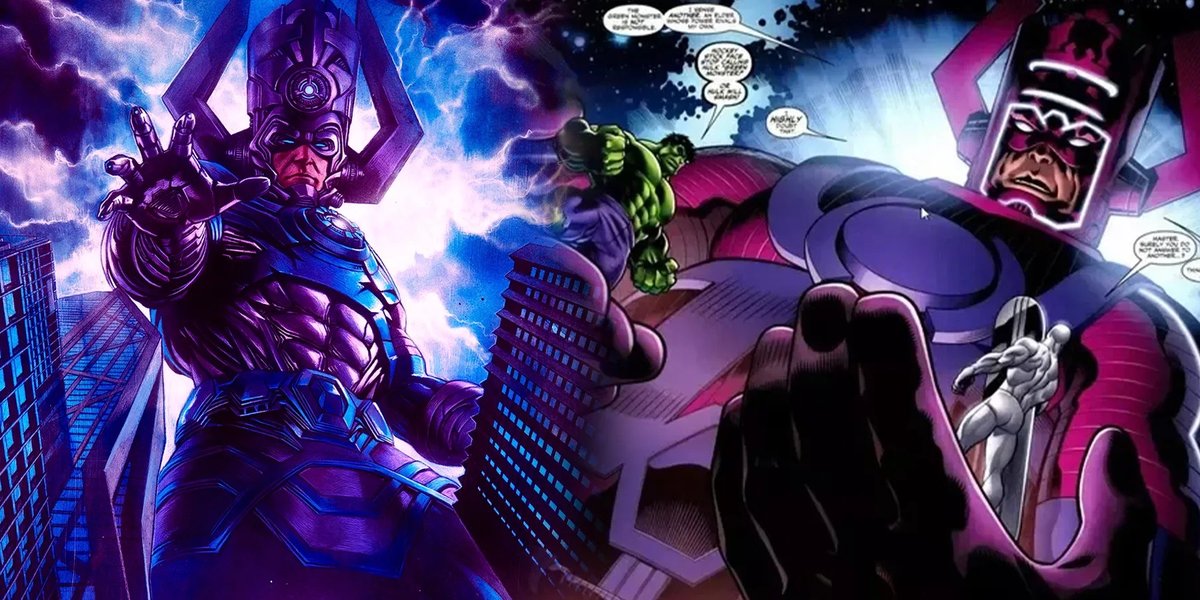
The cosmos of the Marvel Universe is vast and filled with beings of unimaginable power and, often, unimaginable scale. Among them, few strike more awe and terror than Galactus, the Devourer of Worlds. With the highly anticipated The Fantastic Four set to kick off Marvel Studios' Phase 6, featuring Pedro Pascal, Vanessa Kirby, Joseph Quinn, and Ebon Moss-Bachrach, fans are eager to see the iconic cosmic entity brought to life. While we've seen glimpses of Ralph Ineson's vocal and motion capture performance, hinting at a truly massive presence, the question of "How big is Galactus?" is far more complex than a simple measurement.
Galactus's size isn't static; it's a dynamic aspect of his very being. In the comics, his official height is often cited as a formidable 28 feet, 9 inches. Yet, his MCU debut portrays him in a way that suggests a scale far beyond that, casting an imposing shadow over New York City and dwarfing the Statue of Liberty – an estimated 12 miles tall in this particular form. This massive disparity immediately highlights the nuanced discussion around his scale. To truly understand the baseline, you'll want to dive into the specific numbers and their impact: How big is Galactus, really? Explore.
The Shifting Scale of a Cosmic God
What makes Galactus truly unique among Marvel's giants is his inherent ability to alter his size at will. This isn't just for show; it's directly tied to his energy stores and his constant, insatiable hunger. A well-fed Galactus can expand to truly astronomical proportions, capable of dwarfing entire planets and becoming almost immeasurable to mortal eyes. Conversely, a starving Galactus, weakened by lack of sustenance, can diminish his height by significant amounts, potentially shrinking by over 10 feet.
This fluctuating size has led to numerous interpretations and depictions across the decades. From his earliest appearances as Galan, a humanoid alien from the doomed planet Taa, to his transformation into the cosmic entity we know, his visual representation has undergone significant changes. He's a being constantly in flux, and his form is often perceived differently by various species – humans see him as humanoid, Skrulls see him as a Skrull, and so on. Understanding these transformations is key to grasping his full narrative: Explore Galactuss Evolving Scale.
The artistic freedom inherent in comic book storytelling also means that Galactus's size can vary dramatically from panel to panel, artist to artist. These "inconsistencies" are less errors and more reflections of his cosmic, incomprehensible nature. Sometimes he appears merely hundreds of feet tall, sometimes his head alone eclipses a planet. It's these diverse portrayals that build his legend and keep readers guessing. For a deeper look into how his immense presence has been rendered over time, check out: Inconsistencies and Artistic Interpretations of.
Ultimately, Galactus's size is not just a physical attribute; it's a manifestation of his cosmic power. His transformation from Galan was a direct result of his universe collapsing due to the Black Winter, remaking him into the life-sustaining, planet-devouring force he is today. He's self-contained within specialized armor, removing which would lead to the dispersion of his immense cosmic energy, hinting at a true form that is perhaps even beyond the concept of physical dimension. There's a profound connection between his physical presence and his incredible abilities: Galactuss size and cosmic power Explore.
Who is the True Giant of the MCU?
Despite Galactus's awe-inspiring scale and his potential to grow even larger, he currently doesn't hold the title of the Marvel Cinematic Universe's largest villain. That honor belongs to a being of truly mind-boggling proportions: the Celestial Arishem from 2021's Eternals. Arishem is depicted towering over Earth itself, estimated to be approximately twice the planet's height – a staggering 16,000 miles tall, compared to Earth's 7,900-mile diameter. This makes Galactus's 12-mile MCU depiction seem relatively modest in comparison.
While Arishem takes the crown, the MCU has introduced an impressive roster of colossal antagonists over the years. Here's how some of them measure up:
- Dormammu (Doctor Strange, 2016): The dark ruler of the Dark Dimension appeared as a multi-dimensional entity a few miles tall, making Doctor Strange look like an ant compared to his immense pupil.
- Ego the Living Planet (Guardians of the Galaxy Vol. 2, 2017): As his name suggests, Ego is a planet. Though he can project a humanoid avatar, his true form is a sentient celestial body "no bigger than your Earth's moon," putting him at roughly a quarter the size of Earth.
- Surtur (Thor: Ragnarok, 2017): This Fire Demon of Muspelheim starts under 20 feet tall but, upon merging with the Eternal Flame, grows to his full, destructive glory. At approximately 1,000 feet tall, he towered over Asgard's grand palace during its fiery destruction.
- The Elementals (Spider-Man: Far From Home, 2019): These illusions, conjured by Mysterio, reached impressive heights. The largest of them stood between 300 and 400 feet tall, easily looking down on landmarks like London's Tower Bridge (213 feet tall).
- Sandman (Spider-Man: No Way Home, 2021): Flint Marko's sand-powered form could fluctuate dramatically. At his peak, his head alone was four to five times taller than the Spider-Men, suggesting a full height of 150-200 feet tall.
Comparing Galactus to these other cosmic and colossal threats really puts his variability into perspective. It's a universe full of giants, and Galactus is a unique entry in this grand lineup. To see how he stacks up against even more formidable entities from across the Marvel multiverse, you'll want to read: Compare Galactuss cosmic scale.
The Future of the Devourer
With The Fantastic Four ending with Galactus being thrown into the Earth-828 universe, the stage is set for a potential return – and with it, the possibility of him growing even larger. The MCU has a habit of pushing boundaries, and while Arishem currently reigns as the biggest villain, Galactus's size alteration abilities mean he's a perpetual contender for the title. As the Fantastic Four begin their story four years into their hero careers, facing this world-ending threat, his ultimate scale remains a tantalizing mystery. Only time will tell if the Devourer of Worlds will eventually dwarf even a Celestial.