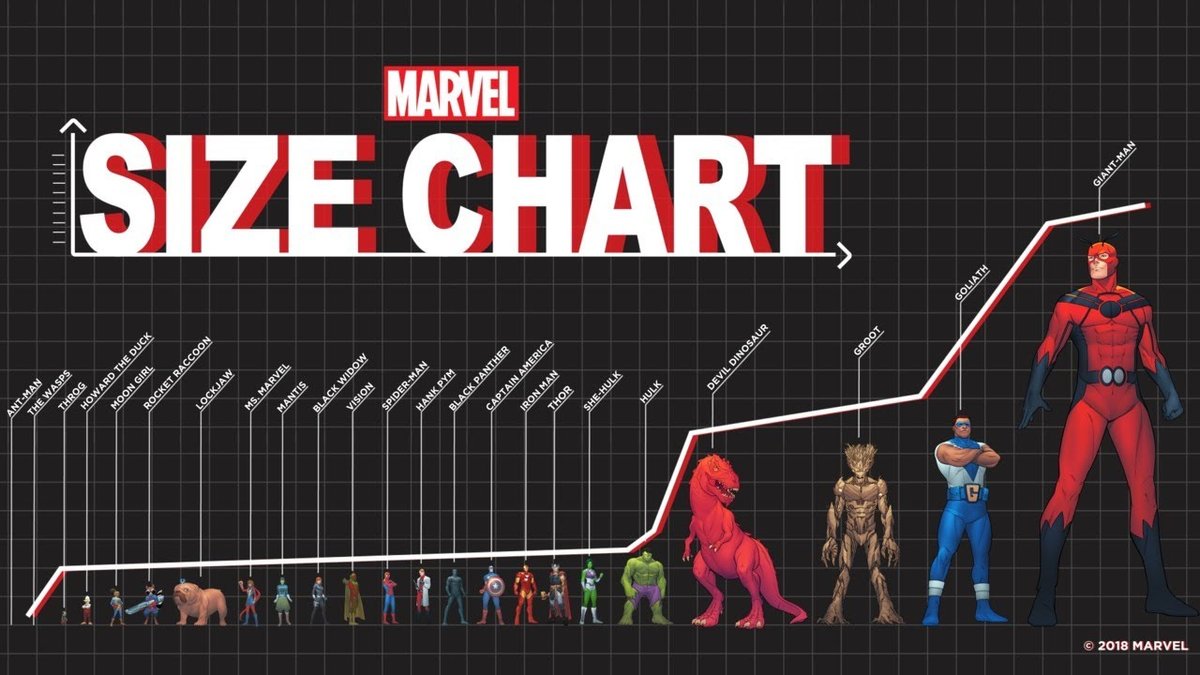
Few characters in the Marvel Universe inspire the same awe, terror, and cosmic curiosity as Galactus, the Devourer of Worlds. From his imposing presence to his insatiable hunger, everything about him is larger than life—especially his actual size. Pinpointing The Scale of Galactus: Official Comic Depictions & Comparisons is a fascinating journey through Marvel's cosmic lore, revealing a being far more complex and variable than many realize. Forget what you think you know about his unchanging stature; Galactus's dimensions are as fluid as the cosmic energy he consumes.
As a seasoned observer of the Marvel cosmos, I can tell you that understanding Galactus means grappling with a being whose physical form is a manifestation of immense power and circumstance, often tailored for the convenience (or terror) of his observers. He's not just big; he's selectively big, with a rich history that explains these dramatic fluctuations.
At a Glance: Galactus's Shifting Scale
- Standard Operating Size: Usually around 29 feet (8.8 m), roughly the height of a three-story building.
- Hunger Pains: Can shrink to 17-18 feet (5.1 m) when severely deprived of cosmic energy.
- Post-Ego Minimum: Vowed to maintain at least 267 feet (81.3 m) to outsize the In-Betweener.
- Cosmic Feasting: When well-fed, he can expand to galaxy-sized proportions.
- True Form Unknown: His appearance is adapted for the observer's comprehension; his origin is Galan of Taa.
- Worldship Taa II: His colossal vessel, named after his home planet, can also change size and can be as large as a solar system.
- Not the Biggest: Despite his grandeur, many cosmic entities, including most Celestials, Eternity, and the Black Winter, far exceed his typical or even maximum observed size.
- Why So Big? His choice to maintain larger sizes is often due to arrogance and vanity, not increased power, as immense sizes demand exponentially more energy.
The Enigma of Galactus's Form: Beyond Simple Dimensions
Before we dive into the numbers, it's crucial to understand a fundamental truth about Galactus: his perceived form is not necessarily his "true" one. Imagine a being of such immense cosmic energy that its raw existence would shatter mortal minds. That's Galactus. For us, his appearances are a courtesy, a translation by his vast power so we might comprehend him without dissolving into madness.
He originated as Galan, a humanoid alien from the utopian planet Taa. When he was reborn as Galactus, his physical essence became something else entirely. What we see—the iconic purple armor, the imposing humanoid figure—is merely a representation, shaped by the observer's psyche. To a being from a different dimensional plane, he might appear as a swirling nebula, a cascade of light, or something utterly alien. This means that when we discuss the impressive scale of Galactus, we're often talking about the perceived physical manifestation, which he consciously manipulates.
Galactus's "Standard" Size: A Shifting Metric
If you ask a casual comic reader, "How big is Galactus?" you'll likely get a range of answers, and surprisingly, many of them might be correct depending on the comic era or his current state. Unlike a static superhero, Galactus's stature is remarkably dynamic, reflecting his cosmic condition and even his mood.
The Everyday Devourer: A Manageable Giant
For most of his appearances, particularly when interacting with Earth's heroes or smaller cosmic entities, Galactus usually clocks in at around 29 feet (8.8 meters). Think about that for a moment: he's roughly the height of a three-story building. This is large enough to be intimidating, to tower over cities and heroes, yet still allow for detailed, grounded interactions within a panel. It's a pragmatic size for storytelling, ensuring he fits on the page without constantly requiring cosmic-spanning visuals.
Hunger's Toll: A Diminished Stature
But Galactus isn't always well-fed. His very existence is predicated on consuming planets, and when he's deprived of this cosmic sustenance, his power wanes, and so does his physical form. During periods of extreme hunger, his size can drop significantly, sometimes to 17-18 feet (5.1 meters). This is a dramatic shrinkage, making him almost "human-sized" by comparison, albeit still a towering figure. It's a physical manifestation of his vulnerability, a visual cue to readers that the Devourer is in dire straits.
The Ego-Driven Minimum: A Vow of Grandeur
One of the most defining moments that impacted Galactus's perceived scale came after an encounter with the In-Betweener. This cosmic manipulator sought to humble Galactus, leading to a vow that would forever alter his "default" setting. To assert his dominance and never again be seen as lesser, Galactus committed to maintaining a minimum size of 267 feet (81.3 meters). Why that specific number? To ensure he would always exceed the In-Betweener's own substantial height of 266 feet.
This intentional inflation represents more than just physical growth; it's a statement of cosmic ego and a permanent adjustment to the impressive dimensions of Galactus. This "new normal" is far more imposing than his original 29-foot standard, pushing him into the realm of true giants, easily dwarfing skyscrapers.
Beyond Human Scale: Cosmic Growth Spurts
While his typical operating heights are impressive, Galactus possesses the inherent ability to alter his size at will, growing to truly incomprehensible scales. This is where the "galaxy-sized" claims originate, and they're not mere hyperbole.
Feasting on Worlds: Galaxy-Sized Power
When Galactus is fully sated with cosmic energy, when he has recently devoured worlds and absorbed their life force, his power surges, allowing him to expand dramatically. In these moments of immense cosmic nourishment, he can swell to truly astounding proportions, reaching galaxy-sized dimensions. Imagine a being so vast it could encompass entire star systems, its form stretching across the void between stellar bodies. This isn't just an artistic flourish; it's an official depiction of his maximum potential.
Such a scale isn't practical for regular appearances, nor is it sustainable. Maintaining such an immense size requires exponentially faster consumption of planets. It's a temporary peak, a display of ultimate power rather than a constant state of being.
Wrestling Suns and Outgrowing Solar Systems
The comics have shown Galactus engaging in feats that truly put his size-altering abilities into perspective. He's been depicted growing large enough to wrestle the Wraithworld sun, an act that would require him to be at least solar system-sized himself. In other instances, he has been shown to outgrow an entire solar system, his form expanding beyond the orbit of planets, encompassing multiple stars and their celestial dance. These depictions serve to illustrate that for Galactus, conventional notions of scale are utterly meaningless. He is, quite literally, as big as he needs or chooses to be.
This extreme variability in Galactus's physical scale is one of the most compelling aspects of his character. It highlights his supreme mastery over cosmic energy and his ability to bend reality to his will, even his own physical form.
The Worldship Taa II: A Planet-Sized Ride
It's easy to confuse Galactus's immense size with his mode of transportation, but they are distinct entities. While Galactus can appear colossal, his ship, the Worldship Taa II, is a marvel of cosmic engineering in its own right, and often, even larger than Galactus himself.
A Legacy in Metal and Energy
Named after his lost home planet, Taa, and the first planet he devoured post-transformation, the Worldship Taa II is no ordinary vessel. It was designed to be a mobile base of operations, a cosmic processing plant, and a testament to Galactus's power. In a truly mind-boggling feat of scale, the Worldship was created to be the size of the solar system where Taa was located. Think about that: a single ship, capable of encompassing multiple planets and a star within its internal structure.
Like its master, Taa II can also alter its size, shrinking for transit or expanding to accommodate its cosmic cargo. However, it's important to note that Galactus typically uses a much smaller, specialized pod for interstellar travel. The Worldship is less a mode of daily transport and more a colossal, self-sustaining cosmic engine and sanctuary. When you consider the sheer scale of Galactus's Worldship, it further underscores the magnitude of his cosmic existence.
Is Galactus the Biggest? Dispelling Cosmic Myths
Given his title as "Devourer of Worlds" and his ability to grow to galaxy-sized, many assume Galactus is among the largest, if not the largest, entity in the Marvel Universe. This is a common misconception. While undeniably vast, he is far from the pinnacle of cosmic scale.
Not as Big as the Universe
Let's clear this up immediately: Galactus is not as big as the universe. His largest observed size is galaxy-sized, which, while unfathomably immense, is still a minuscule fraction of the entire universe. The universe itself is a concept that defies physical measurement within a single entity.
Dementing by Celestials
When Galactus maintains his "new normal" size of 267 feet, he is positively dwarfed by many other cosmic beings, particularly the Celestials. These ancient, armored space gods are typically around 2,000 feet (610 meters) tall. That's nearly eight times Galactus's 267-foot minimum! Imagine an entire fleet of beings, each nearly half a mile tall, standing over a 30-story Galactus. The Celestials are a prime example of entities that consistently operate on a scale far beyond even a robust Galactus.
The True Goliaths: Abstract Entities and Beyond
Beyond the Celestials, the Marvel cosmos is home to entities of such unfathomable scale that Galactus pales in comparison. These are often abstract concepts given sentient form:
- The Black Winter: This primordial entity, a devourer of universes, predates Galactus and even transformed Galan into the Devourer. The Black Winter made Galactus its Herald, demonstrating a power and scale that makes Galactus seem like an ant. It is a cosmic cataclysm, not a singular physical being in the way Galactus is.
- Eternity & Infinity: These are the living embodiments of time and space, respectively, representing the entire Marvel Universe. Their scale is literally universal.
- Oblivion & Death: Personifications of non-existence and the end of all things, their scale is equally abstract and universal.
- The Living Tribunal: The multiversal judge, this entity's face alone can encompass multiple realities. Its power and scale transcend individual universes.
These beings operate on conceptual, multiversal levels that Galactus's physical, albeit variable, scale simply cannot match. He is a force of nature within the universe, but not the universe itself.
The Apocalypse Beast: A Colossal Contender
Even among more "physical" antagonists, Galactus isn't always the biggest. Consider the Apocalypse Beast from Fantastic Four & Iron Man: Big in Japan #3. This monstrous kaiju-like entity was described as over 15,000 feet (4,572 meters) tall and weighing over 3.6 trillion pounds (1.8 billion tons). That's a being nearly 17 times taller than Galactus's 267-foot minimum, and roughly equivalent to the height of 50 Empire State Buildings stacked end-to-end. While perhaps not as cosmically significant as the Celestials, it serves as a stark reminder that sheer physical immensity exists on many levels in the Marvel Universe.
Galactus vs. Earth: A Ground-Level Perspective
To truly grasp Galactus's variable scale, let's bring it down to Earth—quite literally—and compare him to things we can visualize.
The House-Sized Observer
When Galactus is in his typical 29-30 feet (around 9 meters) form, he's comparable to a multi-story house. Imagine him standing in a suburban street; he'd tower over the rooftops, but you could still discern his features without needing an aerial view. This is often the size he assumes when communicating directly with smaller beings or when his portrayal needs to fit within standard comic panel layouts.
Skyscraper Silhouette
Once he activates his "post-Ego" minimum of 267 feet (81.3 meters), Galactus becomes a true giant by human standards. He's now taller than many significant buildings, capable of looking down on most of Earth's tallest skyscrapers. He's an undeniable colossus, his presence filling city blocks. This is a common depiction when he intends to portray his overwhelming power and majesty to a planet's inhabitants.
Planet-Sized Menace
In his most powerful, well-fed states, Galactus can indeed grow much larger than Earth itself. He can be solar system-sized, his body encompassing multiple planets. In these depictions, Earth would be a mere speck, perhaps not even visible against his immense form. It's crucial to remember, however, that this is not his typical reference size. This gargantuan scale is reserved for moments of ultimate power display or when he is actively devouring a planet, his form adjusting to interact with the world he consumes.
The Whys and Hows of Galactus's Fluctuating Scale
Why does Galactus bother changing his size? It's not a mere parlor trick; it's deeply tied to his nature, his power, and his personality.
Vanity and Arrogance: The Cosmic Showman
One of the primary drivers behind Galactus's choice to be larger than necessary is simple: arrogance and vanity. He is a being of immense power, and he wishes to project that power. Being larger, especially his 267-foot minimum, makes him appear more imposing, more god-like. It's a psychological weapon, designed to instill fear and command respect from lesser beings. He enjoys portraying himself as an unstoppable, colossal force. His declaration to always exceed the In-Betweener's height is a prime example of this ego at play.
Energy Consumption: The Cost of Grandeur
However, there's a significant drawback to maintaining immense sizes: it requires exponentially faster consumption of planets. Galactus's body, when expanded to these cosmic dimensions, demands an incredible amount of cosmic energy to simply exist at that scale. It's not about increased power; a 29-foot Galactus has the same inherent power as a galaxy-sized one, but the latter is burning through his energy reserves at an unsustainable rate.
Therefore, his standard 29-foot size, or even his 267-foot "default," represents a more energy-efficient operating mode. The galaxy-sized growth spurts are temporary, unsustainable displays of power, requiring immediate and massive replenishment. This delicate balance between projecting power and conserving energy is a constant struggle for the Devourer.
Navigating the Nuances of Galactus's Scale
Understanding Galactus's scale is less about finding a single, definitive answer and more about appreciating the dynamic nature of his existence. He is a character that challenges our perceptions of size, power, and cosmic hierarchy.
- Context is Key: Always consider the narrative context. Is he interacting with humans? Confronting a Celestial? Actively devouring a world? Each scenario often dictates his depicted scale.
- Artistic Interpretation: While official stats exist, artists often take liberties to convey impact. A panel depicting Galactus towering over a planet might be more symbolic than literal in a given instance, but the potential for such scale remains.
- The Power of Perception: Remember, his true form is unknowable. What we see is what our minds (and the artists) interpret, a testament to his power to project an understandable, terrifying image.
Ultimately, Galactus is a character whose scale embodies the vastness and mystery of the Marvel cosmos. He is both incredibly tangible and utterly incomprehensible, a being whose dimensions shift as fluidly as the cosmic tides he commands.
Beyond the Numbers: The Enduring Impact of the Devourer
Having delved into the intricacies of Galactus's ever-changing size, from his relatively modest 17-foot form to his galaxy-spanning might, it's clear that the Devourer of Worlds is a character who defies simple classification. His scale is a deliberate choice, a reflection of his current state, his cosmic swagger, and the practicalities of a universe where even gods need to conserve energy.
As you continue to explore the cosmic reaches of the Marvel Universe, remember that Galactus stands as a perpetual reminder of the vastness that lies beyond our comprehension. His true impact isn't just in his ability to devour planets, but in his ability to make us question the very boundaries of existence, even his own. Keep an eye on the skies, and never assume what you see is all there is, especially when it comes to the monumental dimensions of Galactus himself.